



What's up North™, Charlie Nardozzi - Design A New Garden Using Bubble Diagrams
Winter is a good time to plan out new garden beds that will make the best use of your space. See how Charlie Nardozzi uses bubble diagrams to accomplish this in his own garden, plus which hardy plants he recommends for each space.
Design A New Garden Using Bubble Diagrams
During the cold and snowy winters in the North, I make good use of my time by planning out new garden beds using bubble diagrams. Even if you’re a poor artist like me, you can use a simple sketch to get an idea of which kinds of gardens and plants you want to grow and where they would best be situated.

Drawing a Bubble Diagram
The easiest way to start is by making a simple sketch that I call a bubble diagram. You can see the one I’ve drawn for my own yard, pictured here. Bubble diagrams aren’t formal designs that are drawn to scale. Rather, they are general indicators of which kinds of garden beds will work best in your sun and soil conditions so you can choose the right plants.
To make a bubble diagram, take a blank sheet of paper and sketch out all the hardscape elements in your yard. These are things like your house, driveway, electrical or underground utility lines, outbuildings, patios, decks and walls, plus natural features such as large trees and boulders. Any prominent, immovable features should be included in your sketch. Remember to include pathways and lawn areas. You can use different colored pencils to better identify each bubble.
Next, make a list of the kinds of garden beds you want to install such as a perennial border, vegetable garden, pollinator garden or native shrub area. Draw a bubble for each one where you think it will get enough light and where the soil and air flow is conducive for growing the types of plants in each bed.
For example, you would want to site a vegetable garden in a full sun location close to the house and grow a native shrub garden where birds can easily and safely access it. Think about the relationship of each type of bed to one another as you fill the page with bubbles. Move them around in various iterations until you feel comfortable with the overall design and flow. Then, start selecting plants that match the conditions of each garden bed. Let’s take a closer look at two kinds of beds I’ve drawn here: a native shrub bed in a wet area and a full sun perennial garden.
Hardy Native Shrubs for Wet Areas
In the top left corner of my bubble diagram, you’ll see I have designated space for native shrubs in a low, wet area that gets part sun. Four native shrubs I recommend for those conditions in northern climates are summersweet, chokeberry, shrubby dogwood and buttonbush.
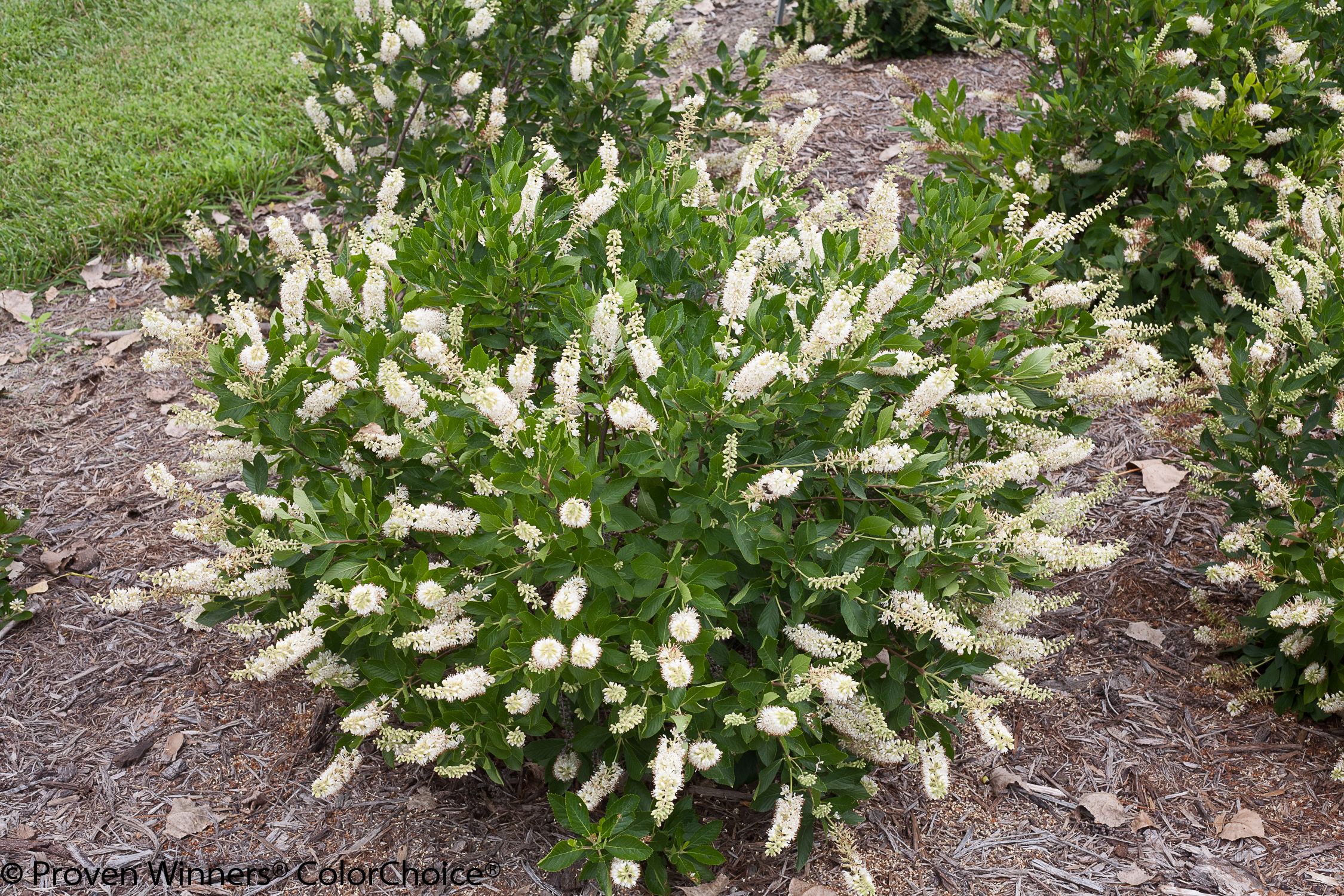
Vanilla Spice® summersweet (Clethra) blooms in midsummer with fragrant, vanilla colored flower spikes that attract butterflies. It is shade tolerant but blooms better with at least some sun. It grows 3 to 6 feet tall and tolerates damp soils where hardy in zones 4-9.
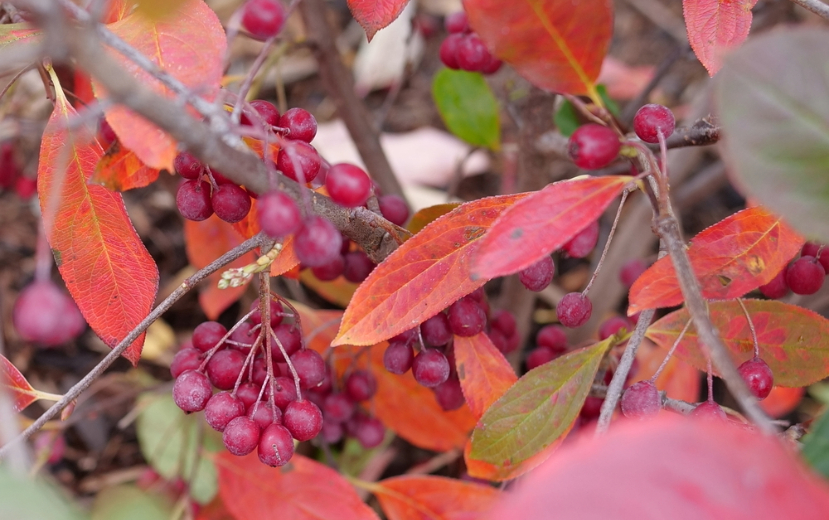
Berry Scape® chokeberry (Aronia) is an earlier bloomer with white flowers that attract pollinating bees in the spring. The flowers turn into berries that start out yellow and turn vibrant red by fall. They are beautiful with the brilliant red fall foliage. It grows 4 to 5 feet tall in part sun to full sun and is hardy in zones 4-9.