




Pretty Plant Combinations to Suit Any Garden Style
It’s easy to pick out pretty plants at the garden center, but how do you know which plants will go well together in the garden or in your patio pots? We’re sharing 20 beautiful ideas with you here, complete with details like how much sun and water they’ll need to thrive.
Let’s get started!
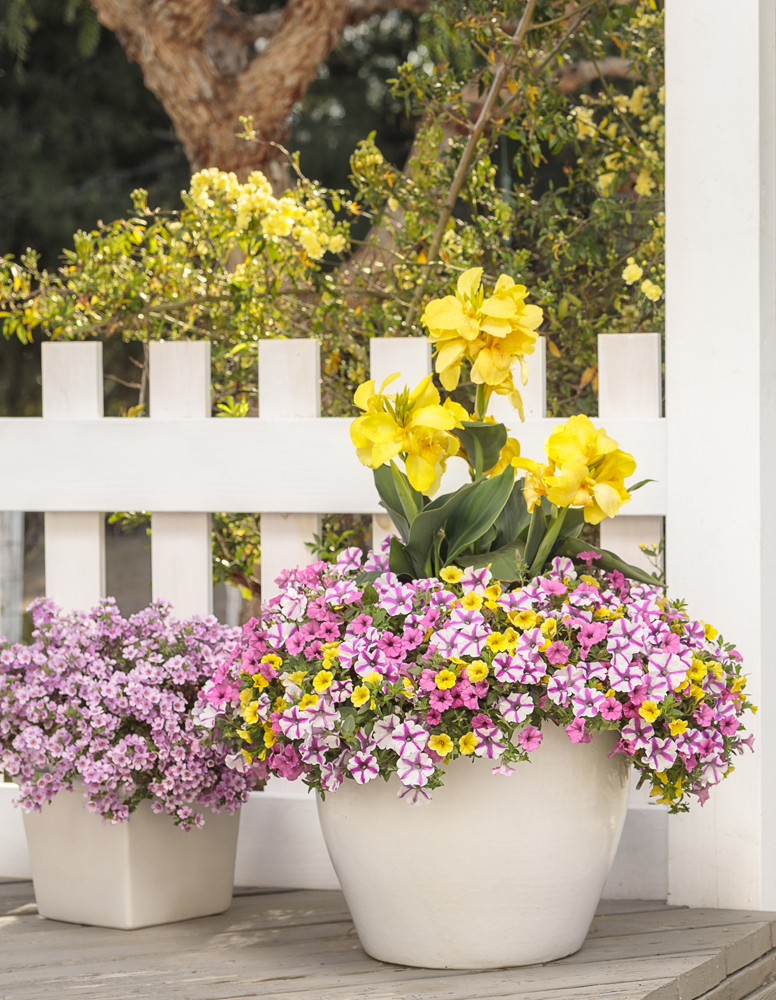
Supertunias + Superbells
Combining two of our best-selling flower types – Supertunia® petunias and Superbells® calibrachoa – creates a vibrant flower display that will brighten any garden from spring through fall. These two thrive best in containers with good drainage rather than in the ground and flourish in full sun to part sun, making them perfect for small garden planting ideas or container arrangements.
Here are a few tips for keeping petunias and calibrachoa growing happily together.
- Supertunias are more vigorous than Superbells, so if you want the Superbells to stand out in a container or bed garden ideas, use fewer petunias and more calibrachoa.
- Superbells generally need less water than Supertunias, and the petunias will happily soak up any extra moisture. Avoid keeping the soil constantly wet—let it dry slightly between waterings.
- Superbells are more particular about soil pH, which is why they do especially well in containers with fresh potting soil. If their foliage starts to turn lighter green, it may be due to high soil pH limiting iron absorption. Correct this by feeding them with Proven Winners’ water soluble plant food, which contains a special form of iron (EDDHA) that’s easier for plants to absorb under alkaline conditions—unlike other fertilizers.
These combinations also make fantastic back garden ideas, adding color and texture along pathways or garden borders.
Find more tips on growing and maintaining Supertunia petunias here and Superbells calibrachoa here.

Powerhouse Combination
You’ve heard us talk about pairing plants with similar vigor, and this is a perfect example. Supertunia Vista® Bubblegum® II petunias make an excellent companion for Graceful Grasses® Vertigo® purple fountain grass because both are extra-vigorous, thrive in full sun, and enjoy average moisture. This combination works beautifully for small garden planting ideas or containers where scale and impact matter.
Since Supertunia Vista petunias can reach up to 2’ tall, they stay in proportion with this 4–8’ fountain grass. Using a shorter grass, such as a 3’ tall purple fountain grass, might result in it being overwhelmed by the petunias. Selecting annual plants of similar vigor ensures they grow in harmony, allowing each bloom to reach its full potential. While this strategy works wonderfully in bed garden ideas, it is essential for bringing your best back garden ideas to life. Whether you are browsing back garden ideas for lush borders or need to frame a winding path, matching plants by growth habit ensures a balanced, professional finish.
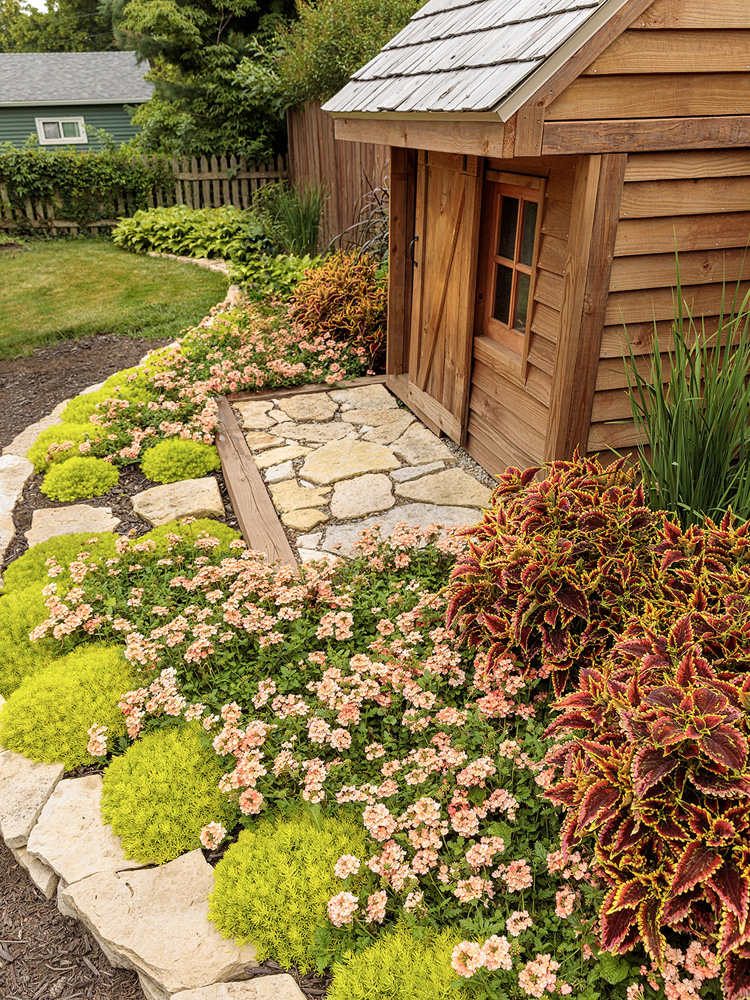
Pretty in Peach
The warm peach, red and yellow tones of this landscape pairing create a welcoming atmosphere and really shine when the heat of summer settles in. It combines two annuals—ColorBlaze® El Brighto coleus and Superbena® Peachy Keen II verbena—with an edging of zone 7 hardy Lemon Coral® sedum. (‘Angelina’s Teacup’ sedum could be substituted as a perennial version for zones 4-9.)
Why this pairing works:
- All the plants prefer full sun to part sun and average moisture, making them easy to care for in bed garden ideas.
- Well-drained soil enriched with Proven Winners’ continuous-release plant food keeps these plants thriving. Supplement with water-soluble plant food once or twice per month.
- The plant colors are complementary, with the many hues of the patterned coleus echoed in the verbena and sedum.
- The textures are balanced, moving from the finely textured sedum in front to the coarser coleus in the back, perfect for creating interest in back garden ideas.
- Layering the plants from shortest to tallest allows each one to shine, showcasing the design beautifully.
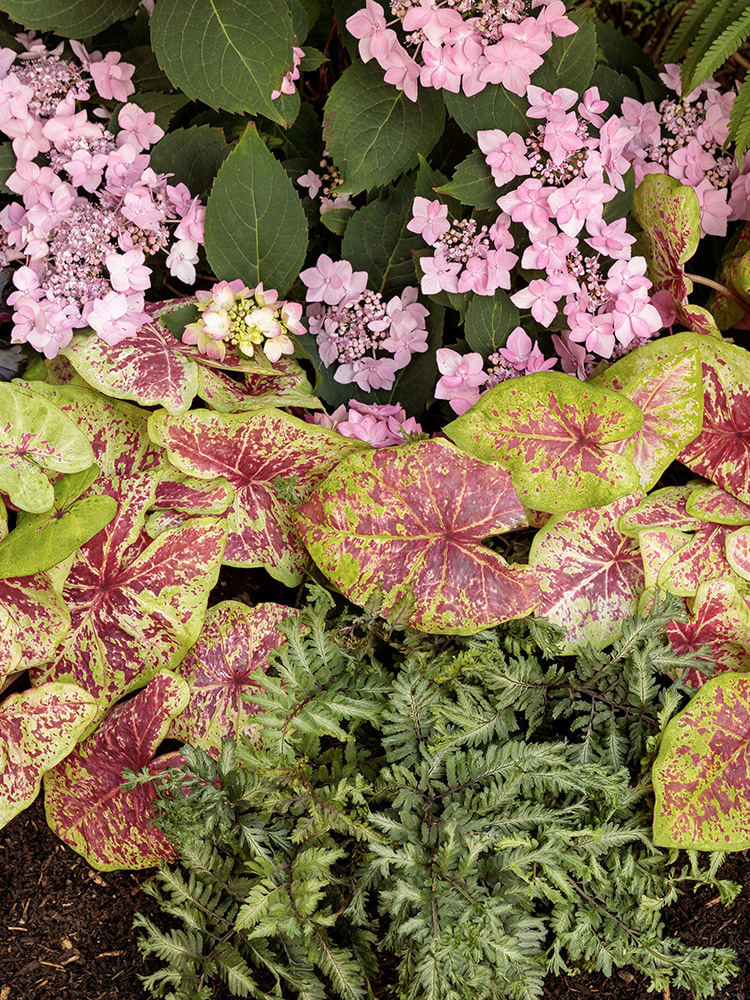
All-Season Interest in Shade
Hydrangeas are like potato chips—once you grow one, you want to collect more! Many gardeners ask which plants pair well with them, and here’s a colorful idea that highlights the fun foliage of caladiums and ferns. Even when the hydrangea isn’t in bloom, there’s plenty of color and textural interest to enjoy, making it a perfect option for back garden ideas.
Here, Let’s Dance Can Do!® reblooming hydrangeas are underplanted with Heart to Heart® ‘Raspberry Moon’ caladiums and ‘Crested Surf’ Japanese painted ferns in a part shade location that receives 4 to 6 hours of sun per day. They all thrive in rich, moist soil that is well-drained. If that doesn’t sound like the conditions you have to offer, consider pairing them together in a large container instead.
Find more fab foliage plants for shade in this article.

Midsummer Night’s Dream
This magnetic trio of chartreuse and purple plants will draw your eye beginning in midsummer when they all come into full bloom. The purple lollipop-shaped blossoms that top ‘Serendipity’ allium really pop against the bright chartreuse gold foliage of ‘Lemon Squeeze’ hardy fountain grass which also blooms the same time of year. In the background, you can see the glowing gold foliage of ‘Drops of Jupiter’ Ornamental Oregano which has rosy purple flowers of its own.
Both the allium and oregano are absolute magnets for pollinating bees and butterflies when in bloom. You’ll see them hard at work collecting pollen on every single sunny day. And since the foliage has an herbal scent, deer and rabbits tend to pass them right on by. It’s the best of both worlds!
Grow this trio in full sun, even in warm climates. Well-drained soil is important, but you won’t need to worry about amending it to be especially rich. These plants all will grow in good ole garden soil. Hardiness: ‘Serendipity’ allium, zone 4-8; ‘Lemon Squeeze’ fountain grass, zone 5-9; ‘Drops of Jupiter’ oregano, zone 4-9.

Black and White Garden Design
Black and white flowers and plants paired together, either interspersed randomly or in an intentional pattern, bring instant sophistication to a garden design. The effect is especially striking when done on a larger scale.
Here, Primo® ‘Black Pearl’ coral bells are paired with Magic Show® ‘White Wands’ spike speedwell in a full sun garden in zone 5. The tiny white blossoms that dangle from the tall, black flower scapes of the coral bells echo the pointy white wands of neighboring plants in midsummer. If you find that coral bells need more shade in your warm climate, try subbing Sweet Caroline Raven™ sweet potato vine instead.
Explore more ways to use the color black in your garden designs in this article. Into goth gardening? You’ll like this.

Primary Color Matchup
Bold primary colors like red, yellow, and blue make a striking statement in full-sun gardens, as they remain vibrant even under intense rays. In contrast, pastel colors can appear lighter and sometimes washed out in bright sunlight. If your garden is in a wide-open space or an area with strong afternoon sun, using primary colors can create a dramatic visual impact. This approach works beautifully for back garden ideas, bed garden ideas, or small garden planting ideas where color is the focal point, and you want maximum eye-catching effect.
In this pairing, the huge, scarlet red blossoms of Summerific® ‘Holy Grail’ perennial hibiscus visually bounce off the golden yellow flowers of ‘Tuscan Sun’ false sunflowers. These two primary colors are complementary, but each holds its own in the design. When the sunflowers are more mature, they will completely surround the hibiscus. Both thrive in full sun and moist soil in zones 4-9 and bloom from midsummer into early fall.
Find 10 more companions for Summerific hibiscus in this article.

Summertime Butterfly Buffet
Here’s a landscape combination you may not have tried yet—Butterfly Bush + Hydrangeas. At first glance, it might seem surprising, but this pairing works beautifully.
Pugster Periwinkle® Butterfly bush is hardy in zones 5-9 and prefers full sun in all zones. Incrediball® Smooth Hydrangea (H. arborescens) is hardy in zones 3–8. It blooms best in full sun in cooler zones but prefers some afternoon shade in warmer climates. When these requirements overlap, both shrubs flourish together in full sun in zones 5–7, making this combination ideal for back garden ideas or bed garden ideas.
This scene was photographed in our trial gardens in zone 6. The butterfly bushes face south, while a row of small serviceberry trees lightly shades the hydrangeas on the north side of the bed. Incrediball flowers earlier in the summer, producing huge white mophead blossoms that age to a lush jade green, providing a stunning backdrop for the periwinkle-purple flowers of the butterfly bush that bloom from midsummer through fall.
Butterfly bush is drought-tolerant once established but also grows well with average moisture as long as the soil drains well. Smooth hydrangeas also prefer average moisture, making them a better match in this pairing than bigleaf hydrangeas, which require more water. Any excess moisture the butterfly bush doesn’t use will be taken up by the nearby trees, making this planting arrangement a smart and beautiful option for small garden planting ideas.

Low Maintenance, All-Season Shrub Border
Here’s a low maintenance, colorful pairing for full sun to part sun landscapes with average to moist soil. Meet Fluffy® western Arborvitae and its planting partner, Invincibelle Garnetta® Smooth Hydrangea, photographed in our zone 6 trial garden in late summer.
Fluffy® is a golden, conical-shaped western arborvitae (Thuja plicata) that matures to 5-10’ tall x 3-6’ wide. It keeps its vivid coloring all season and has good winter color retention. It grows in zones 5-8 where it prefers full sun to part sun. If you would like something similar but more deer-resistant than arborvitae, try swapping Fluffy out for Soft Serve® Gold false cypress (zone 4-8) or Pinpoint® Gold juniper (zone 5-7).
Invincibelle Garnetta® smooth hydrangea (H. arborescens) is a 2 ½’ tall shrub that grows in full sun to part shade in zones 3-8. It blooms reliably every year, beginning a few weeks later than our other Invincibelle hydrangeas and reblooms for much of the summer. Rich garnet flower buds open to lush pink blossoms on strong stems that don’t flop. They make gorgeous cut flowers, both fresh and dried.
Want to see more ideas on how to incorporate evergreens into your landscape? Check out this article.
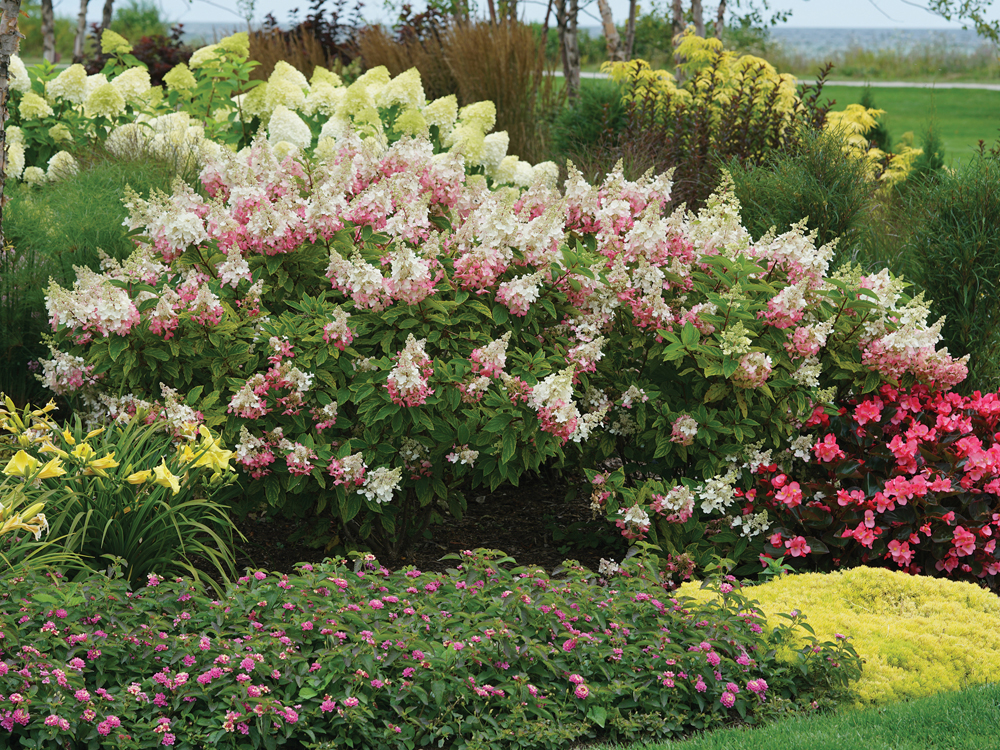
Stunning Mixed Border with Panicle Hydrangeas
This gorgeous mixed border has it all—stunning panicle hydrangeas, long-blooming perennials, fantastic foliage plants, and annuals that bring color to the space from spring to fall. From front to back, left to right:
- Luscious® Royale Cosmo Lantana – annual except in zones 9-11, full sun
- Lemon Coral® Sedum – annual except in zones 7-11, part sun to full sun
- Surefire® Rose Begonia – annual except in zones 10-11, sun or shade
- Rainbow Rhythm® ‘Going Bananas’ daylily – perennial in zones 3-9, part sun to full sun
- Pinky Winky® Panicle Hydrangea (paniculata) – shrub for zones 3-8, part sun to full sun
- ‘Limelight’ Panicle Hydrangea (paniculata) – shrub for zones 3-9, part sun to full sun
- Winecraft Black® Smokebush – shrub for zones 4-8, full sun
- Lemony Lace® Elderberry – shrub for zones 3-7, part sun to full sun
Did you know that not all panicle hydrangeas bloom at the same time? Some, like Little Quick Fire®, bloom very early in the summer, while late varieties such as ‘Limelight’ bloom much later. In the landscape pictured, the designer paired midsummer bloomer Pinky Winky with the late-blooming ‘Limelight’ panicle hydrangeas so that flowers would be in bloom from July through October. By the time ‘Limelight’ starts flowering, Pinky Winky’s blooms are already transitioning from white to pink. This layering technique is perfect for back garden ideas or bed garden ideas, ensuring continuous color throughout the season. You can find a chart showing the relative bloom times for each panicle hydrangea on our website.
This vibrant display of annuals, perennials, and shrubs thrives in full sun to light shade with average moisture. By pairing plants that can go several days between watering, it’s easy to care for them in a single sprinkler zone—making this combination a smart choice for small garden planting ideas as well.

Heavenly Hydrangea Pairing
Gorgeous flowering hydrangeas are some of the most widely planted shrubs across North America. If you’re struggling to know what to pair with them, first take a look at how much space you have to work with. In most cases, you’ll want low-growing plants like the Dolce® ‘Wildberry’ Coral Bells you see here to grow around the base of your hydrangeas. By using something short, you won’t cover up any of those amazing hydrangea blooms.
A few more details make this a perfect plant pairing:
- The soft pink tones of the Invincibelle Spirit II® Smooth Hydrangea flowers pictured here coordinate beautifully with the fruity purple tones of the coral bells.
- Both enjoy similar growing conditions.
- In the North, they will thrive together in full sun to part sun. In the South, they will both need some protection from the hot afternoon sun.
- Both enjoy average amounts of moisture, meaning the soil isn’t soggy but doesn’t dry out either.
- Both need well-drained soil.
- Their hardiness zones are similar. Invincibelle Spirit II smooth hydrangea: zones 3-8. Dolce® ‘Wildberry’: zones 4-9.
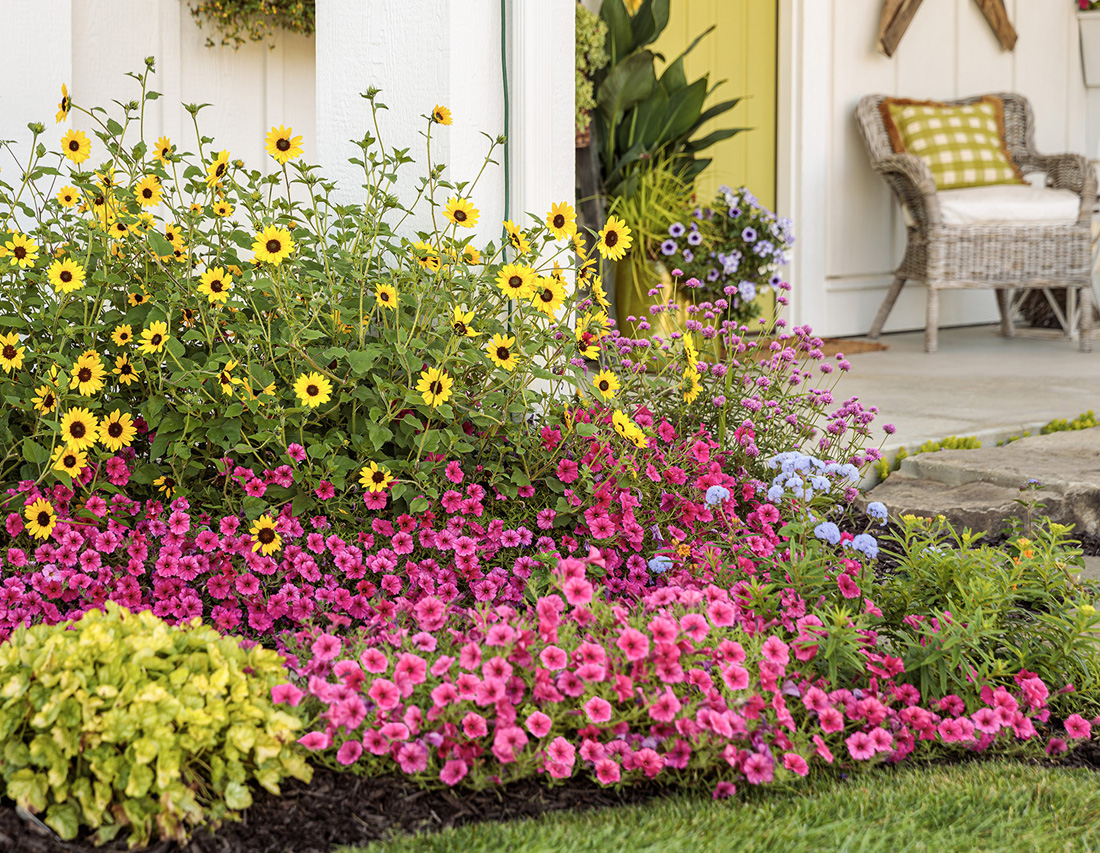
Bold Colors, Strong Plants
When you grow our extra-vigorous Supertunia Vista® petunias, it’s important to pair them with plants of equal vigor to create a balanced, beautiful display. Choosing a partner that is too small or slow-growing can result in it being quickly overwhelmed by the petunia blooms. Don’t underestimate how large and fast these petunias can grow—this strategy works especially well for small garden planting ideas, bed garden ideas, or back garden ideas where you want every plant to shine without being overshadowed.
Here, our Suncredible® Yellow multiflora sunflowers are paired perfectly with Supertunia Vista® Paradise petunias. Both are strong, quick growers that thrive in full sun and warm, summer weather. They need average amounts of moisture and appreciate an application of continuous-release plant food mixed into the soil when you plant them. Since the sunflowers grow at least 2-3’ tall, they’ll grow big enough to be seen behind the petunias without being overrun
Want more ideas for what to plant with Supertunia Vista® petunias? Here’s a list of recipes.

Elegant Texture for Shade
If you garden in the shade, you probably are already growing some hostas. While they have interesting foliage, you can spruce up that space even more by adding a few colorful caladiums and silver-speckled lungwort foliage. Ferns make a great textural addition, too. Here, Heart to Heart® ‘Splash of Wine’ caladiums are paired with ‘Spot On’ lungwort and young Shadowland® ‘Wheee!’ and ‘Waterslide’ hostas. As the hostas mature and gain more of their mature traits, the blend of textures will be even more outstanding.
What makes this a perfect plant pairing:
- All of the plants prefer part shade to nearly full shade conditions and rich, moist soil.
- The shapes of the leaves are all similar, producing a quilt-like effect.
- The soft pastel tones comprise a soothing color palette.
- These plants all grow at about the same rate and have a similar habit, so they won’t overrun one another as they mature.
- Hostas and lungwort are both hardy in zones 3-9. The caladiums are replanted each year.
Hot Fun in the Summertime
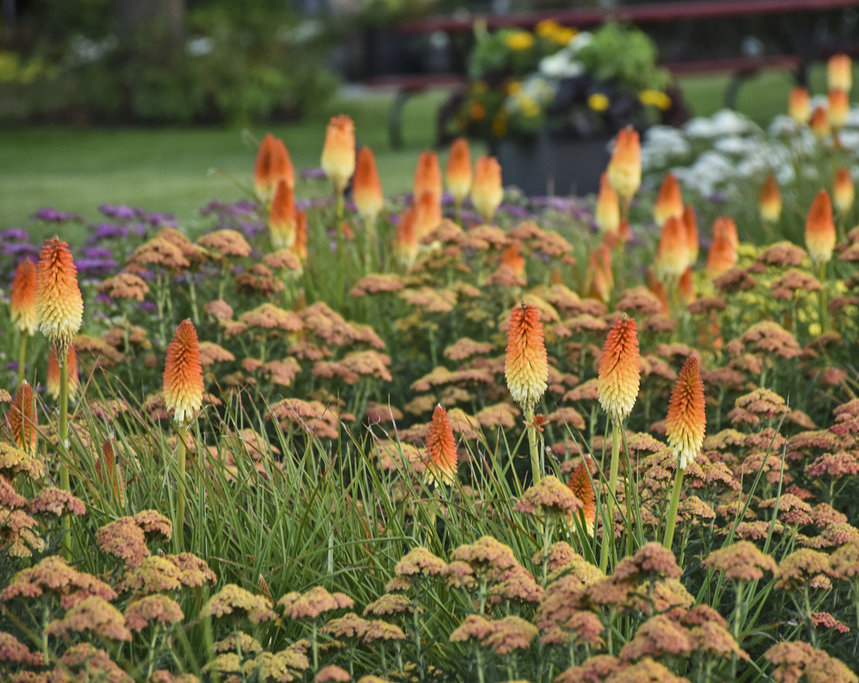
This whimsical pairing of Pyromania® ‘Hot and Cold’ red hot pokers and ‘Firefly Peach Sky’ yarrow is at its peak in midsummer when both perennials are in full bloom. But the show doesn’t stop there! Since both varieties are rebloomers, you’ll get a repeat performance after a brief lull, lasting until the fall. By planting two varieties with similar orange tones, you’ll create a monochromatic effect in your design.
Both of these perennials need full sun, heat, average well-drained soil, and no supplemental fertilizer to grow well. Plant them where the sprinklers barely reach—daily watering would be their demise. Firefly yarrow is hardy in zones 3-8. Our red hot pokers grow in zones 5b-9.

Easy Foundation Bed Makeover
Here’s a unique solution to liven up boring foundation plantings for the summertime. If your traditional home has a row of evergreens growing up along the foundation with nothing in front of them, consider widening your bed to accommodate some colorful annuals. By doing so, you’ll retain the coverage in winter but bring far more curb appeal to the bed in the summer.
Here, a grouping of 2 to 2 ½’ tall annual ‘Sky Rocket’ grasses was planted in front of a row of evergreen shrubs that are up against the house. In front of them, a mass of 6-12” low-growing Supertunia Mini Vista® petunias in shades of White and Violet Star was planted between the grasses and rock border. You can use any shade of petunias you like, just make sure to choose these shorter Mini Vistas so your grasses won’t get overrun. They will form a solid carpet of flowers that lasts from planting time until frost without deadheading.
Grow this combination in full sun with average moisture in all but the hottest climates in the summertime. An application of continuous-release plant food mixed into the soil when you plant will help your flowers thrive all season.
Early Summer Eye-Catcher
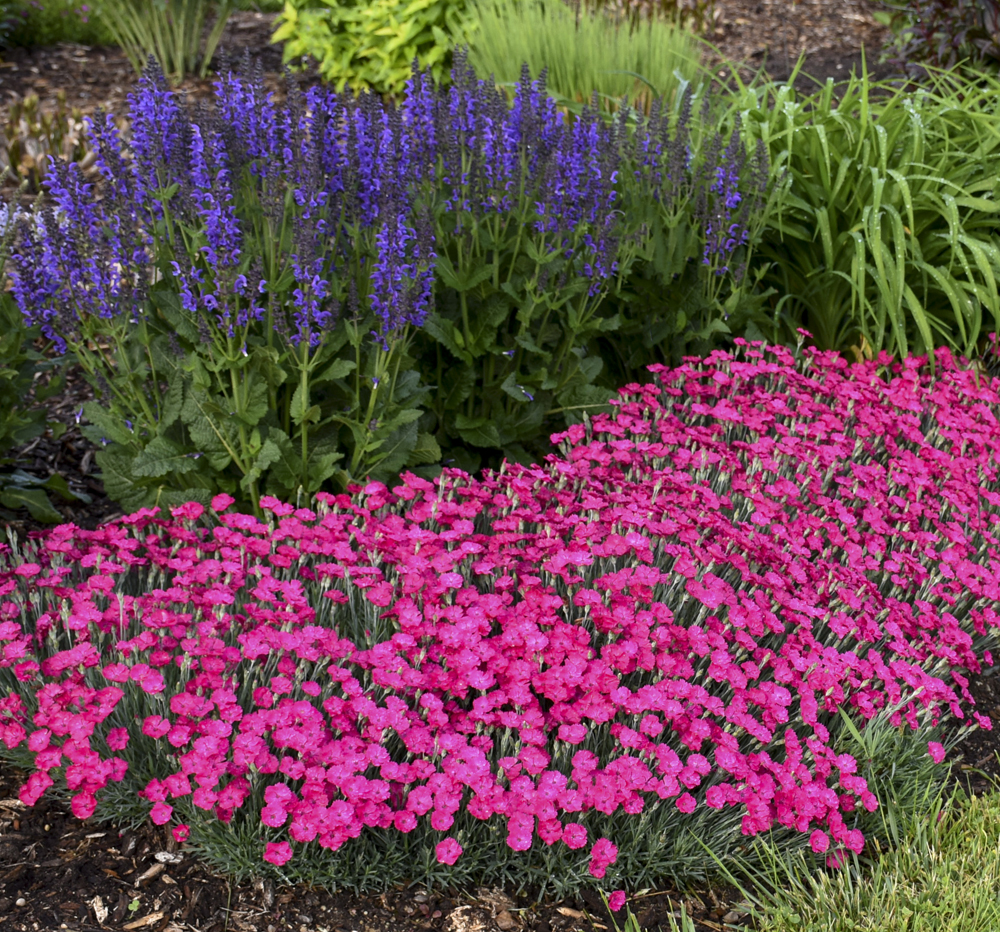
While it’s a good idea to plant perennials that bloom at different times so there’s always something flowering in your landscape, small pairings of plants that bloom together are always eye-catching. A classic combination for early summer (or late spring in the South) is dianthus and salvia. Here, a 6-8” tall grouping of ‘Paint the Town Magenta’ dianthus is planted in front of a 20-22” tall clump of Color Spires® ‘Indiglo Girl’ perennial salvia. Both share a similar bloom time early in the season, with some rebloom throughout the summer and early fall.
A few more details make this a perfect plant pairing:
- Both plants need 6+ hours of sun to flower prolifically. They do not grow well in shade.
- Both like the same kind of soil—well-drained soil that’s not too rich in nutrients and dries out a bit between waterings.
- The contrasting shape and scale of the plants creates a layering effect with the taller plants in back and a carpet of shorter plants in front.
- Their hardiness zones are similar. ‘Indiglo Girl’ salvia: zones 3-8. ‘Paint the Town Magenta’ dianthus: zones 4-9.
- Both plants are fragrant, which helps them be more deer resistant and attract pollinators.
Elegant COR-TEN® Steel Container Planting
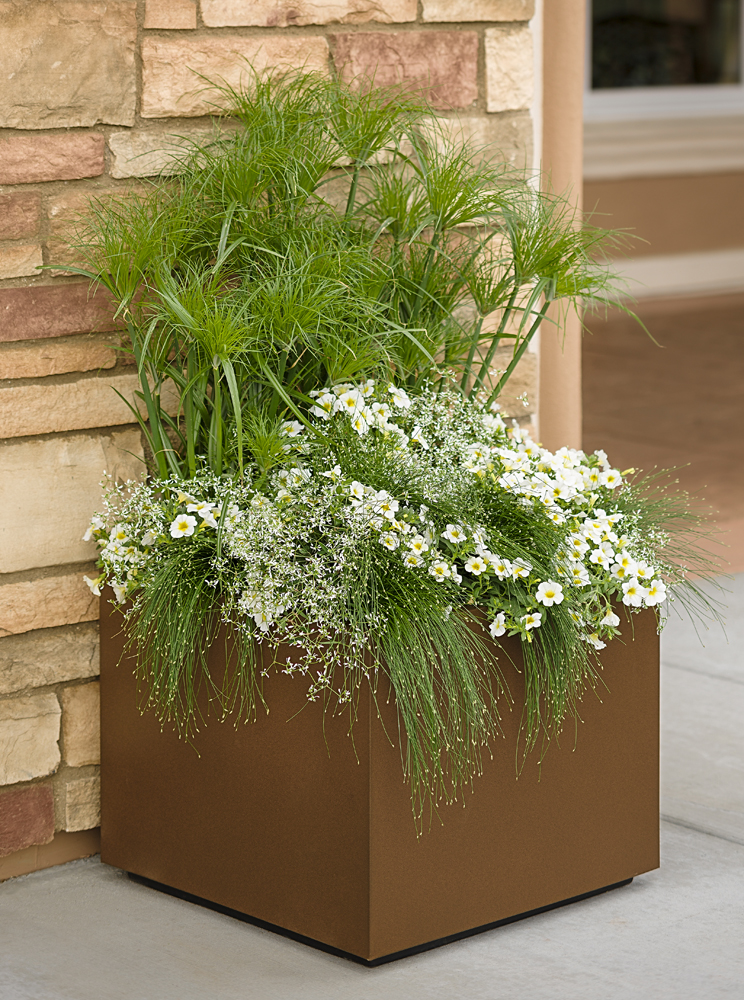
If an elegant, upscale container planting is just what your sunny space needs, try this perfect plant pairing in a large COR-TEN® steel planter. The recipe, named Rustic Chic, combines these elements:
- Prince Tut® Cyperus grass - thriller
- Fiber Optic grass - spiller
- Diamond Frost® Euphorbia - filler
- Superbells® Over Easy™ II Calibrachoa – filler and spiller
A monochromatic white palette paired with lush greens creates a clean, bright, and sophisticated look in this container arrangement. While the grasses prefer consistent moisture, the calibrachoa and euphorbia tolerate having some of their water shared with neighboring plants. Both types of flowers thrive with only average moisture. A weekly to bi-weekly application of water-soluble plant food, focused on the calibrachoa, helps maintain their vibrancy. This classic combination works beautifully for small garden planting ideas, elegant bed garden ideas, or stylish back garden ideas where a cohesive, monochromatic display is desired.
Learn more about how to pair plants together successfully in containers in this article.

A Flowering Succulent Carpet
Along the edge of a dry, sunny flower bed or pathway, or planted at the feet of a heat-tolerant shrub is where this carpet of succulents will thrive. It combines the fantastic textural foliage of Lemon Coral® sedum with the all-summer flowering Mojave® Fuchsia moss rose to create a vibrant mass of cheerful color all season. Since they share a similar growth rate, you won’t have to worry about one outcompeting the other for space.
Going away for the weekend or forgetting to water for a few days won’t set these drought tolerant succulents back. They continue to shine through the heat and won’t need to be fertilized to stay in bloom from planting time until frost. Though Lemon Coral sedum is perennial in zones 7-11, you’ll want to replant annual Mojave moss roses each spring. Try a different color every year! They come in these five fun colors.

Purple + Chartreuse = A Winning Combination Every Time
If you struggle with color pairings, try purple and chartreuse together. It works every time, whether you’re looking for container companions or larger plantings for the landscape. Here, we’ve paired ‘Miss Violet’ butterfly bush with Fluffy® Western arborvitae. The purple-violet summertime blooms and glowing chartreuse-gold evergreen foliage will easily catch your eye and that of pollinators who are happy to stop by the butterfly bush for lunch.
What makes this a perfect plant pairing:
- Contrasting colors of foliage and flowers
- Shape and scale of the two plants, with one not overpowering the other
- Year-round structure and interest from pairing an evergreen with a deciduous shrub
- Both plants absolutely require well-drained soil and thrive in full sun, though Fluffy can take a bit of shade.
- Their hardiness zones are similar. Butterfly bush: zones 5-9. Western arborvitae: zones 5-8.